
ADHD Shopping Addiction: When Impulse Buying Becomes Compulsive
Published: November 12, 2026 · By Monica Becerra · 9 min read
The parcel is still in the trunk of the car, three days after it arrived. You carried the others in while nobody was looking, deleted the shipping email, and told yourself this was the last one. Now you are looking at the order confirmation for the next one anyway. If that is you, this is not a character flaw, and it is worth separating from the ordinary impulse buy.
In short: ADHD shopping addiction is the popular name for compulsive buying, where purchases feel hard to stop, get hidden, and keep happening despite the damage. It is different from an occasional impulse buy, and research links it with ADHD symptoms without saying ADHD causes it. What helps is friction placed before the checkout, less secrecy, and professional support when the pattern keeps repeating.
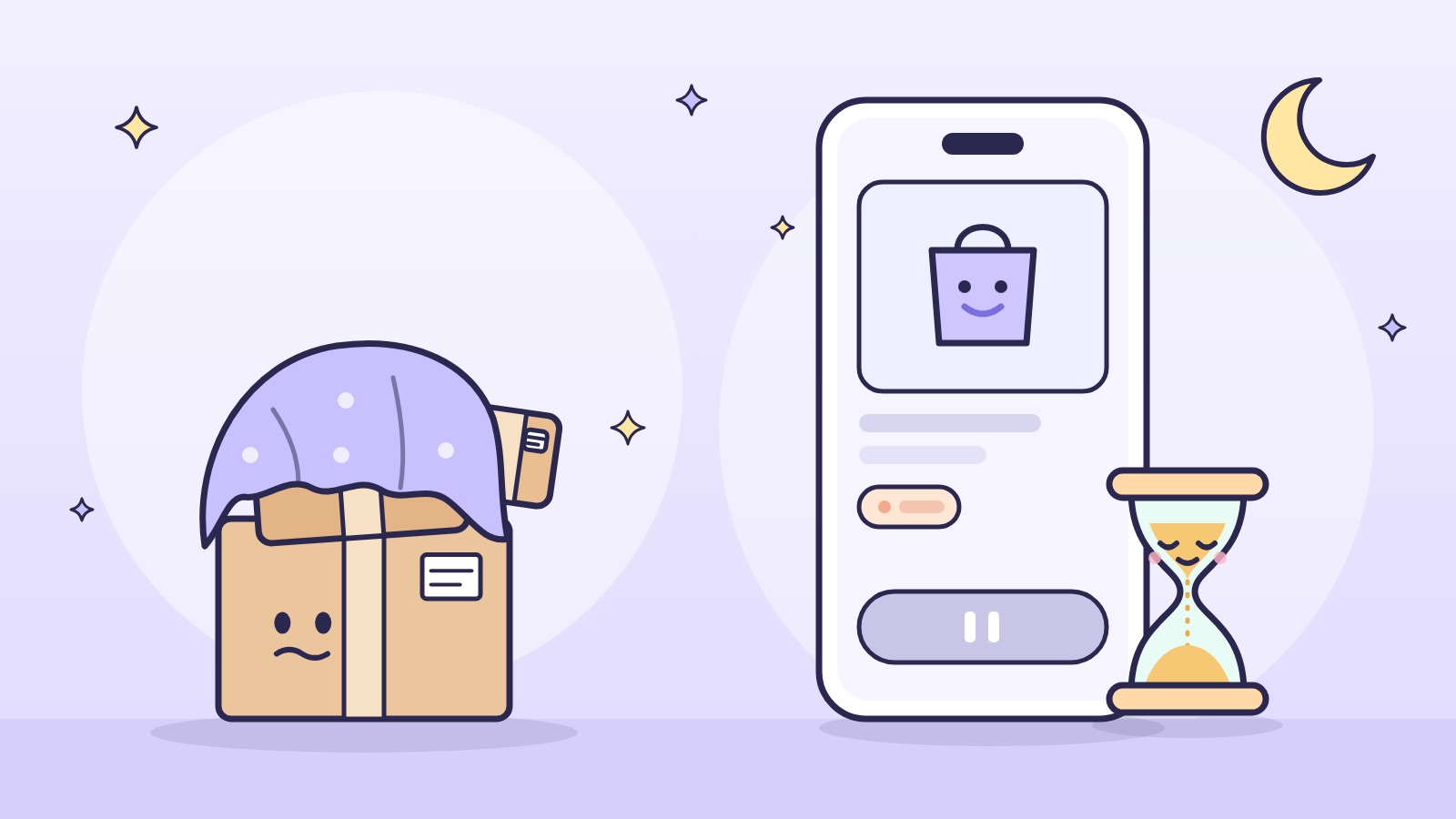
An impulse buy and a compulsive one are different animals
Most people buy something on a whim now and then, and most people with ADHD do it more often than they would like. That is the territory of impulse triggers: a single purchase, a clear spark, a bit of regret afterwards. Compulsive buying is a pattern rather than an event. Researchers use the term compulsive buying disorder for people whose shopping feels driven, repeats despite real consequences, and takes over time, money and attention.
A pooled analysis of 40 studies put the rate of compulsive buying in non-clinical populations at roughly 5 percent, with higher rates among young people and women, though measures varied widely between studies. So it is not rare, and it is not a sign that someone is shallow or greedy.
What it feels like from the inside
The giveaway is rarely the amount. It is the order of events. The urge builds, the purchase brings a short wave of relief or excitement, and then comes the dip: guilt, a sinking stomach, a promise to stop. For a day or two the promise holds. Then something stressful happens, or something boring, and the cycle starts again.
Another sign is that the buying stops being about the item. Many people describe unopened bags, duplicates, tags still on, things bought for a version of themselves who has not shown up. When the act of buying matters more than owning the thing, and returning it feels as hard as stopping, that points toward compulsion rather than a bad afternoon in the shops.
Why ADHD and compulsive buying keep turning up together
Two lines of research are worth knowing. In a study comparing people with compulsive buying disorder to controls, the compulsive buyers reported higher trait impulsivity and more ADHD symptoms, yet there was no consistent pattern of neuropsychological deficits. And in a long-term study that followed participants from adolescence into their forties, adult ADHD symptoms were among the factors linked with compulsive buying, alongside earlier impulse buying and depressed mood.
Please read that carefully. These are associations. They do not say that ADHD causes compulsive buying, and most people with ADHD never develop it. What they suggest is that the same things that make waiting hard, a brain that chases a quick reward and a mood that needs lifting, also feed the cycle.
The secrecy is doing more damage than the shopping
Hidden parcels, deleted emails, a second card, a friend who never gets told the real number. Secrecy feels like protection, but it works like fuel. The longer something is hidden, the larger the shame, and shame is exactly the feeling that sends many people back to the checkout page for relief.
I know this loop from the inside. The money is rarely the heaviest part. The heaviest part is carrying it alone, and the fear of what happens the day somebody opens the cupboard. Telling one safe person, even just a sentence, tends to loosen it more than any resolution made in private.
Friction that helps, and friction that backfires
Willpower at the moment of the urge is the weakest tool, so the useful moves happen earlier. Make the purchase slower: remove saved cards from your browser and phone, log out of the shops you visit most, unsubscribe from sale emails, and move shopping apps off your home screen. Put a wait between wanting and buying, a day for small things and longer for big ones. The point is not to forbid, it is to give the urge time to fade, which it usually does. My own rule, since 2020, is three months: if I still want something after waiting that long, I buy it without guilt. Most things do not survive the wait.
Friction can also backfire. A rule so strict that one slip feels like total failure often produces a binge and more hiding. Cutting up every card in a burst of resolve can leave you unable to pay for basics. Go for rules you could still follow on a bad day. And look at what the buying is doing for you. If it is soothing stress, boredom or loneliness, give that need another door to walk through, a call, a walk, a bath, whatever you honestly find works, so the shop is not the only one open.
When it is time to ask for support
Consider talking to a professional if the buying keeps going despite real attempts to stop, if you owe money you cannot explain or repay, if you hide it from people you live with, or if it is tied to low mood that does not lift. I cannot diagnose anyone, and nothing here replaces a clinician, but I can say that asking is not an overreaction.
A systematic review of 29 treatment studies concluded that group psychotherapy currently looks like the most promising option, while also warning that most studies were of weak quality and the evidence is still developing. That honesty matters. It means help exists, it means the research is young, and it means you are not failing because there is no neat fix yet.
Free on iPhone and Android. Get it on Google Play →
How Finiverse helps with this
Finiverse is not a treatment and it will not stop anyone from shopping, but it can add the friction that compulsive buying lacks. You can put a want on your Wishlist and set a wait from a day to 3 months, use Impulse Pause when the urge hits, and turn on night pause for the late hours when buying tends to happen. You can see prices in coffees or in hours of work, which makes a cart feel like what it costs.
The part I care about most is the honesty. You can log a mood on any expense, so over time your own history shows which feelings sit behind your purchases, and Sam, our assistant, reads that pattern without judgement. There is also a view of what you did not spend. If you want a calmer relationship with your balance while you work on all this, you can hide balances too. For more on single purchases, see why ADHD brains buy on impulse and ADHD and money.
Quick answers
What is ADHD shopping addiction?
It is the popular name for compulsive buying in people who also have ADHD or ADHD traits. Researchers call the pattern compulsive buying disorder: shopping that feels driven, repeats despite consequences and is often hidden. Studies link ADHD symptoms with compulsive buying, but ADHD does not cause it and most people with ADHD never develop it.
How is compulsive buying different from impulse buying?
An impulse buy is a single, unplanned purchase, often followed by mild regret. Compulsive buying is a repeating pattern that feels hard to control, continues despite real harm such as debt or conflict, and is often hidden because of shame.
When should I look for professional help?
Consider it when you keep buying despite real attempts to stop, owe money you cannot repay, hide purchases from people close to you, or feel low most days. A doctor or therapist can assess what is going on. Group psychotherapy is currently the most promising studied option, though the evidence is still developing.
Is compulsive spending a sign of ADHD?
Not by itself. Compulsive spending, also called compulsive buying, can happen with or without ADHD. Research finds it turns up more often alongside ADHD symptoms, probably because of impulsivity and emotions that arrive fast, but that doesn't mean ADHD causes it. If your spending feels out of your control, a doctor or psychologist can help you understand what's behind it.
Is there an app that helps with ADHD shopping addiction?
Finiverse is a personal finance app built for neurodivergent people. It is not a treatment, but it adds friction before a purchase with Impulse Pause, a Wishlist with a wait from a day to 3 months and night pause, shows prices in coffees or hours of work, lets you log a mood on any expense, and has Sam, an AI assistant that never judges. It is free to download on the App Store.
Sources
- Black, D. W. (2007). A review of compulsive buying disorder. World Psychiatry, 6(1), 14–18.
- Black, D. W., Shaw, M., McCormick, B., Bayless, J. D., & Allen, J. (2012). Neuropsychological performance, impulsivity, ADHD symptoms, and novelty seeking in compulsive buying disorder. Psychiatry Research, 200(2–3), 581–587.
- Brook, J. S., Zhang, C., Brook, D. W., & Leukefeld, C. G. (2015). Compulsive buying: Earlier illicit drug use, impulse buying, depression, and adult ADHD symptoms. Psychiatry Research, 228(3), 312–317.
- Maraz, A., Griffiths, M. D., & Demetrovics, Z. (2016). The prevalence of compulsive buying: A meta-analysis. Addiction, 111(3), 408–419.
- Hague, B., Hall, J., & Kellett, S. (2016). Treatments for compulsive buying: A systematic review of the quality, effectiveness and progression of the outcome evidence. Journal of Behavioral Addictions, 5(3), 379–394.
Wait first. Then decide.
Finiverse adds the pause that the checkout page leaves out. Impulse Pause, a Wishlist with a wait, and no judgement.
Download Finiverse free →Free on iPhone and Android. Get it on Google Play →